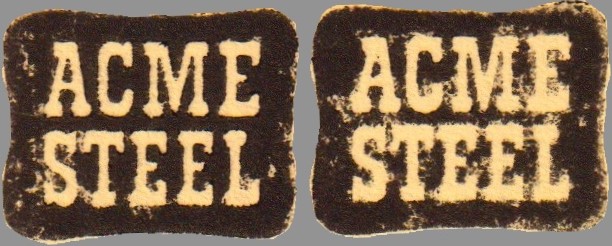
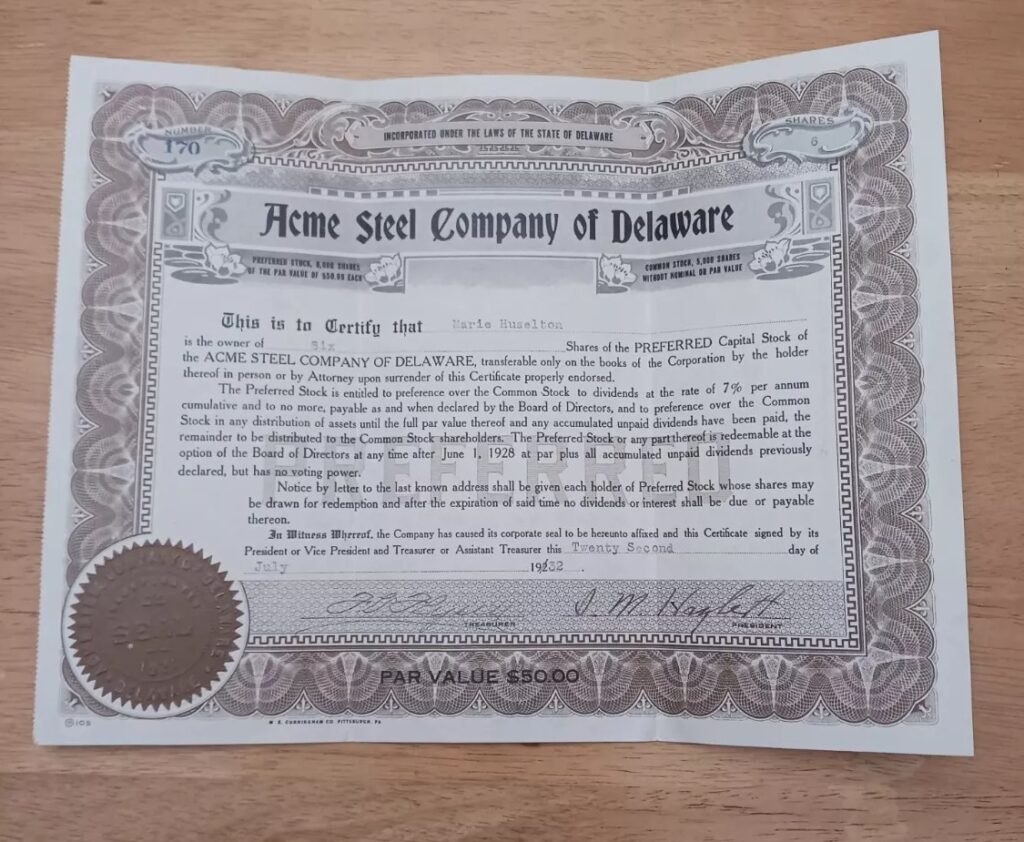
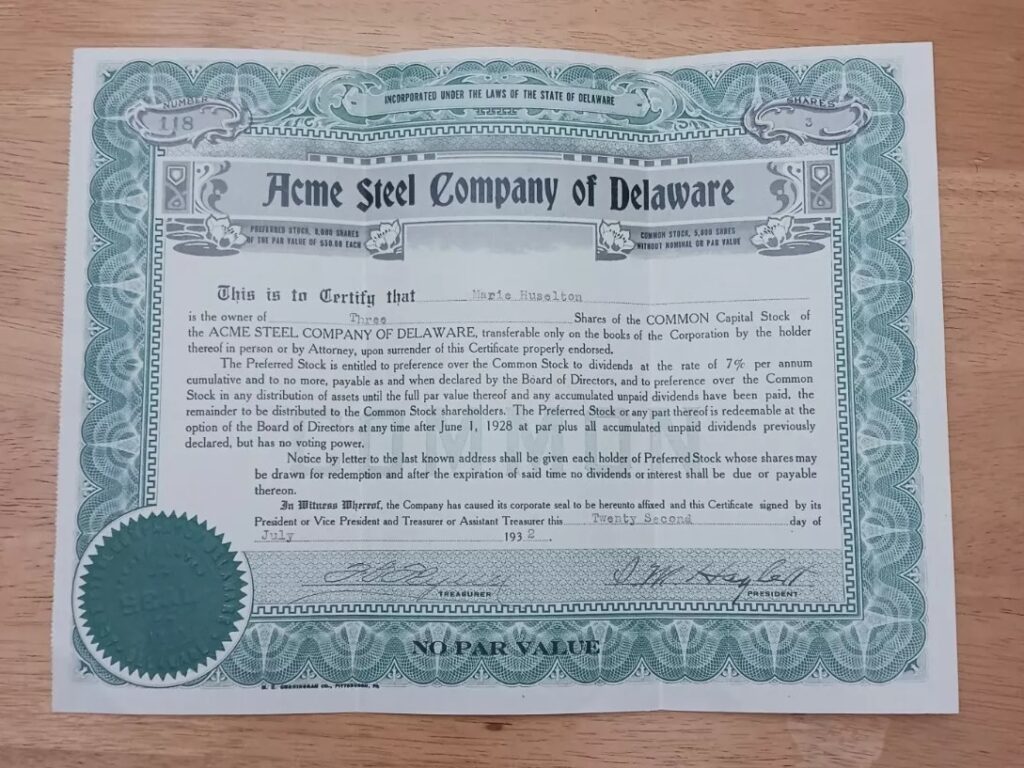
These stock certificates once stood for something much larger than paper. They were proof of ownership in Acme Steel and its parent, Interlake Iron—companies whose mills, batteries, and byproduct plants shaped thousands of lives along the Calumet River.
I’ve collected these documents over time, through digital archeology. They survived long after the shares themselves were cancelled, reminders of an era when a piece of paper connected investors in New York or Chicago to the coke batteries on Torrence Avenue.
Some are beautifully engraved, others simple and functional. All of them are evidence that what happened here mattered—not just to workers and managers, but to the wider industrial world that depended on the output of this place.
Below are images of a few examples from my collection.
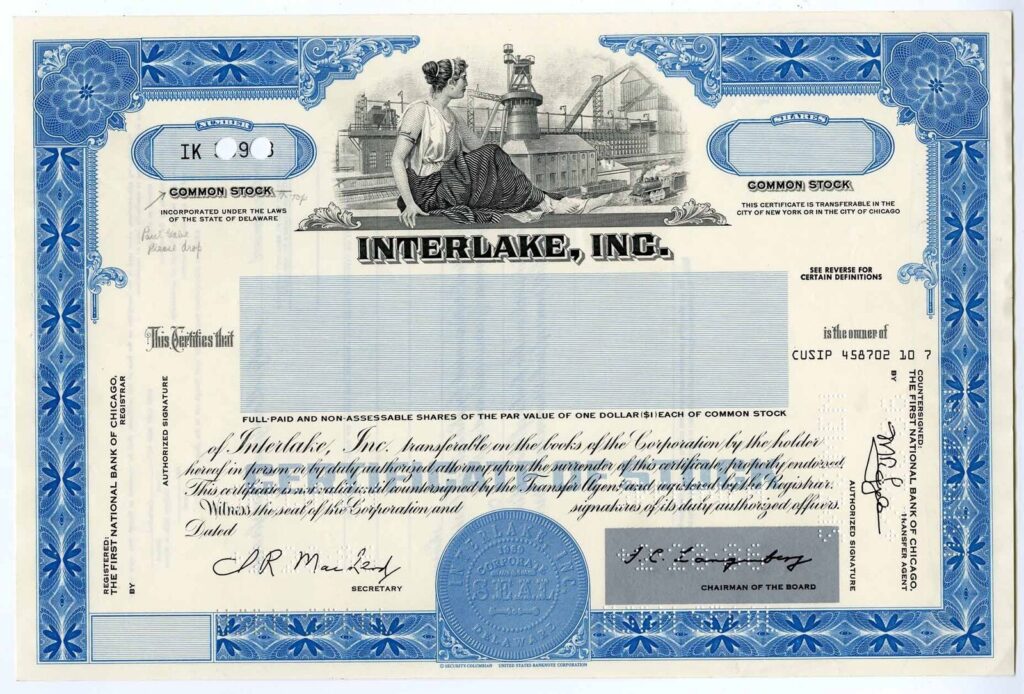
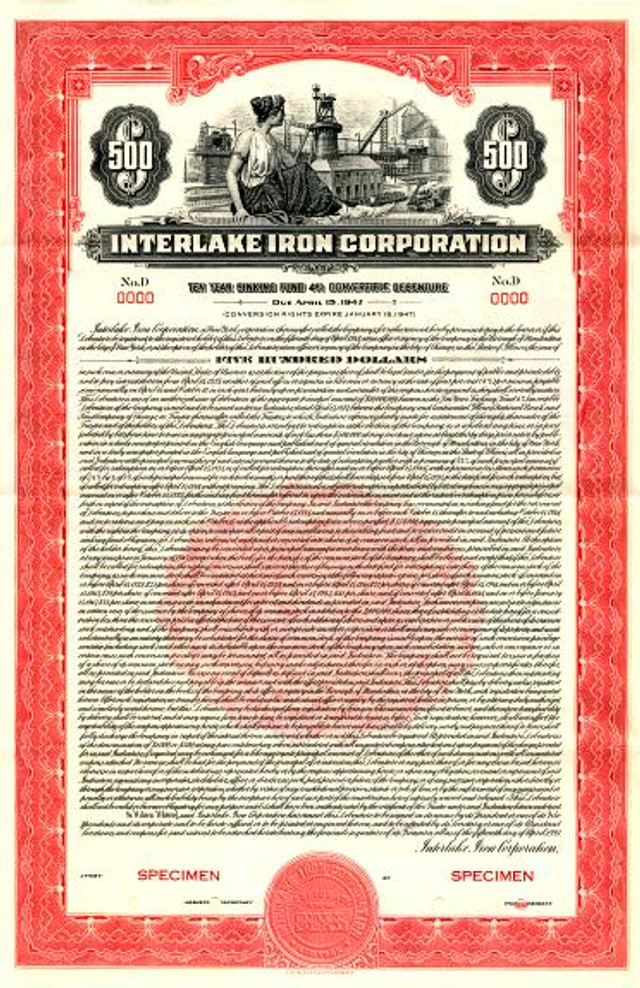
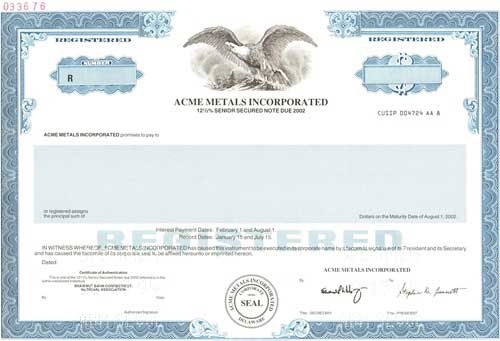
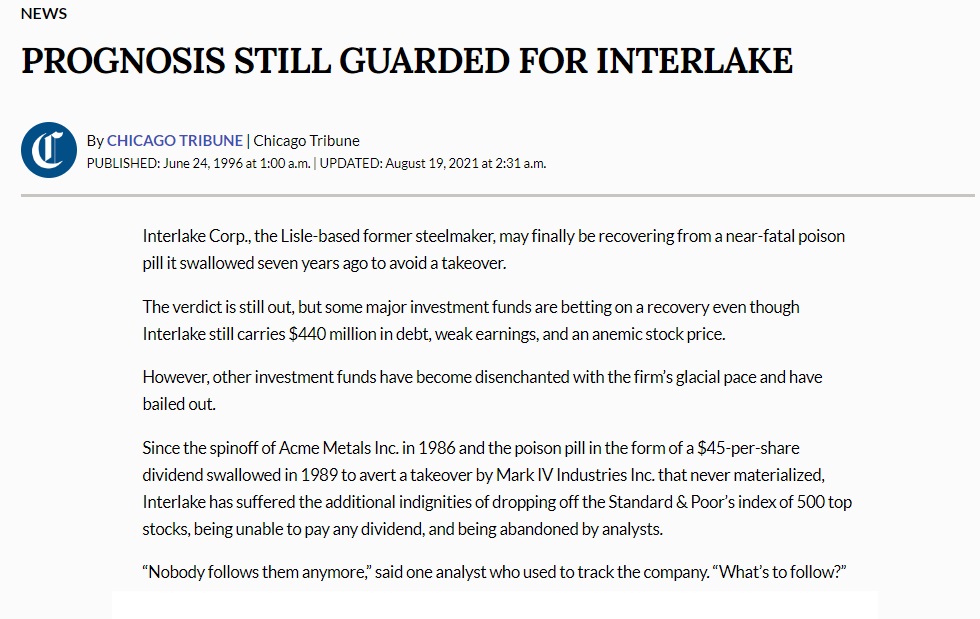
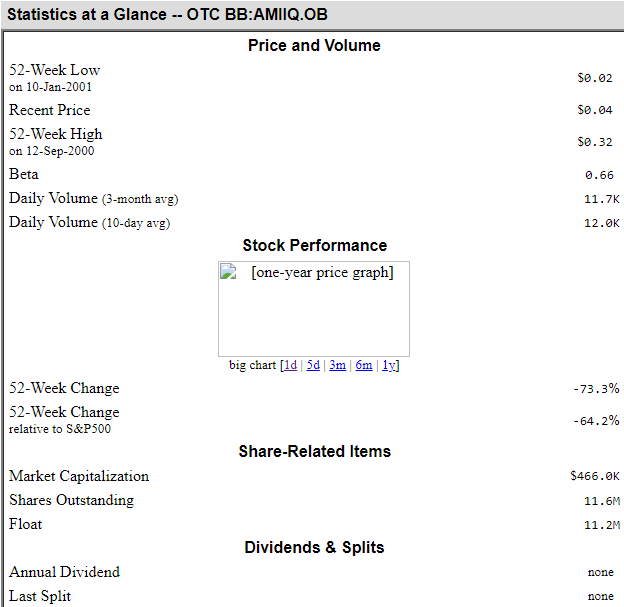
While the engraved stock certificates carry a certain dignity, these snapshots from the 1990s and early 2000s show the other end of the story.
By then, Interlake was fighting for survival, burdened by debt, forgotten by analysts, and eventually trading for pennies. The Chicago Tribune described its decline in cautious terms—“prognosis still guarded”—but the reality was that the company had slipped from the ranks of the S&P 500 to the over-the-counter market, where a share could be bought for less than the price of a postage stamp.
It’s a reminder that even the most imposing industrial enterprises are fragile in the long run. All that remains today are artifacts: a certificate that once represented ownership, a newspaper clipping that chronicled the unraveling, and a few old screenshots showing just how far it all fell.
These two annual reports from 1980 and 1981 capture Interlake at a moment when it was still a formidable force in the American steel and coke industry.
The tone of these documents—optimistic, assured, full of charts projecting steady growth—stands in stark contrast to what came later. Within a decade, Interlake would spin off Acme, confront financial headwinds, and begin its long decline toward irrelevance on Wall Street.
In that sense, these reports are time capsules: evidence of a company still confident in its place in the world, before debt, divestitures, and market shifts rendered all those forecasts obsolete.
For anyone trying to understand how an industry giant could disappear so quickly, this is where the story looked strongest—just before the unraveling began.